
The automotive industry runs one of the most competitive digital advertising markets in the world. Buyers no longer walk into a showroom cold. They research models, compare finance offers, and shortlist dealers online long before they book a test drive.
For dealership owners and marketing directors, google ads for car dealerships automotive is no longer an optional traffic channel. It is the primary system for capturing high-intent leads and turning search demand into showroom visits and delivered units.
Winning in 2026 is not about bidding on a few model keywords and hoping for form fills. It requires a full-funnel performance system that connects search intent to live inventory and CRM outcomes—exactly the standard an experienced Google Ads agency builds for automotive advertisers.
Why Google Ads Is the Backbone of Automotive Growth
Car buying is high-consideration and emotionally driven, with a long sales cycle. Interruption channels alone cannot carry the journey. Google Search captures users when they are actively looking for a solution.
In automotive, intent usually falls into four stages:
- Research: “best midsize SUV 2026,” “fuel economy comparison”
- Consideration: “Honda Civic vs Corolla,” “certified pre-owned warranty”
- Dealer shopping: “Toyota dealer near me,” “[brand] lease deals [city]”
- Transaction: “finance approval,” “trade-in value,” “book test drive”
Matching bids and landing pages to those stages prevents burning budget on top-of-funnel browsers while underfunding ready-to-buy searchers—core discipline in google ads for car dealerships automotive campaigns.
Core Ad Formats for Dealerships
1. High-Intent Search Campaigns
Search remains the bedrock of automotive PPC. Mid- and bottom-funnel keywords position your dealership as the immediate answer to local queries. Strong Google Search Ads setups highlight lease payments, APR offers, and warranties in extensions so qualified buyers click with clear expectations.
2. Vehicle Ads
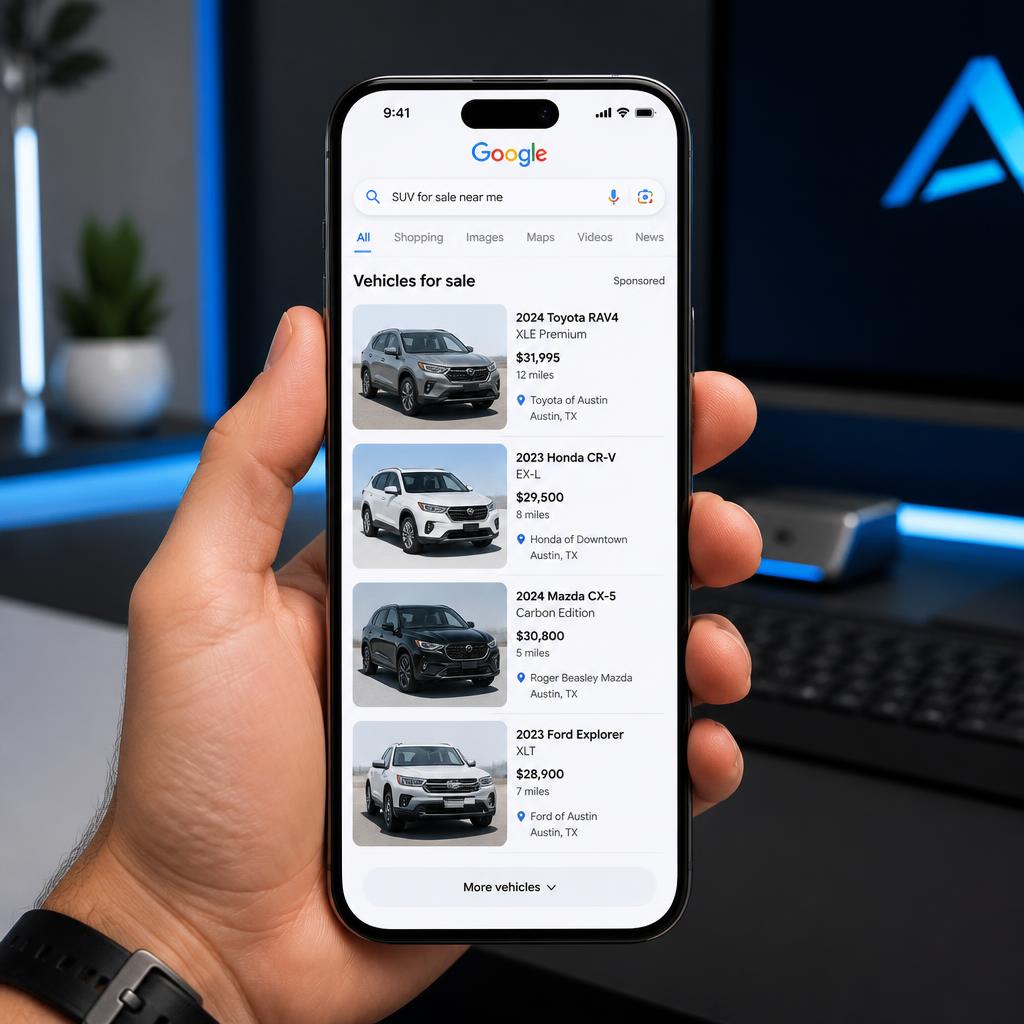
Vehicle Ads are feed-based, visual placements that can show vehicle image, price, mileage, and dealership location. Because shoppers see the car and price before they click, traffic to Vehicle Detail Pages (VDPs) is usually far more qualified than generic search clicks.
3. Performance Max Anchored by Real Data
PMax works in automotive when it is constrained with quality signals:
- First-party CRM customer lists
- Clean, frequently updated inventory feeds
- Account-level negative keyword coverage to block DIY, jobs, and toy/model queries
Without those inputs, PMax often optimizes for cheap website activity instead of sold units—especially when teams rent google ads account infrastructure without clear CRM ownership.
The Hardest Challenges in Automotive PPC
Lead-to-Sale Tracking Disconnect
Many accounts optimize for button clicks, VDP views, or every form fill. A form fill does not pay the floorplan—a delivered vehicle does. If Google is rewarded for low-quality digital events, it will keep finding cheap, non-converting traffic.
Static or Broken Inventory Feeds
Vehicle Ads live and die by feed freshness. Promoting a certified pre-owned sedan that sold yesterday wastes spend and damages trust. Real-time or multi-daily feed updates are non-negotiable for google ads for car dealerships automotive programs.
Extreme CPC Pressure
Automotive CPCs are among the highest in Search. Profitability depends on intent purity, VDP relevance, and offline conversion feedback—not on winning every impression.
Winning Campaign Architecture for Dealerships
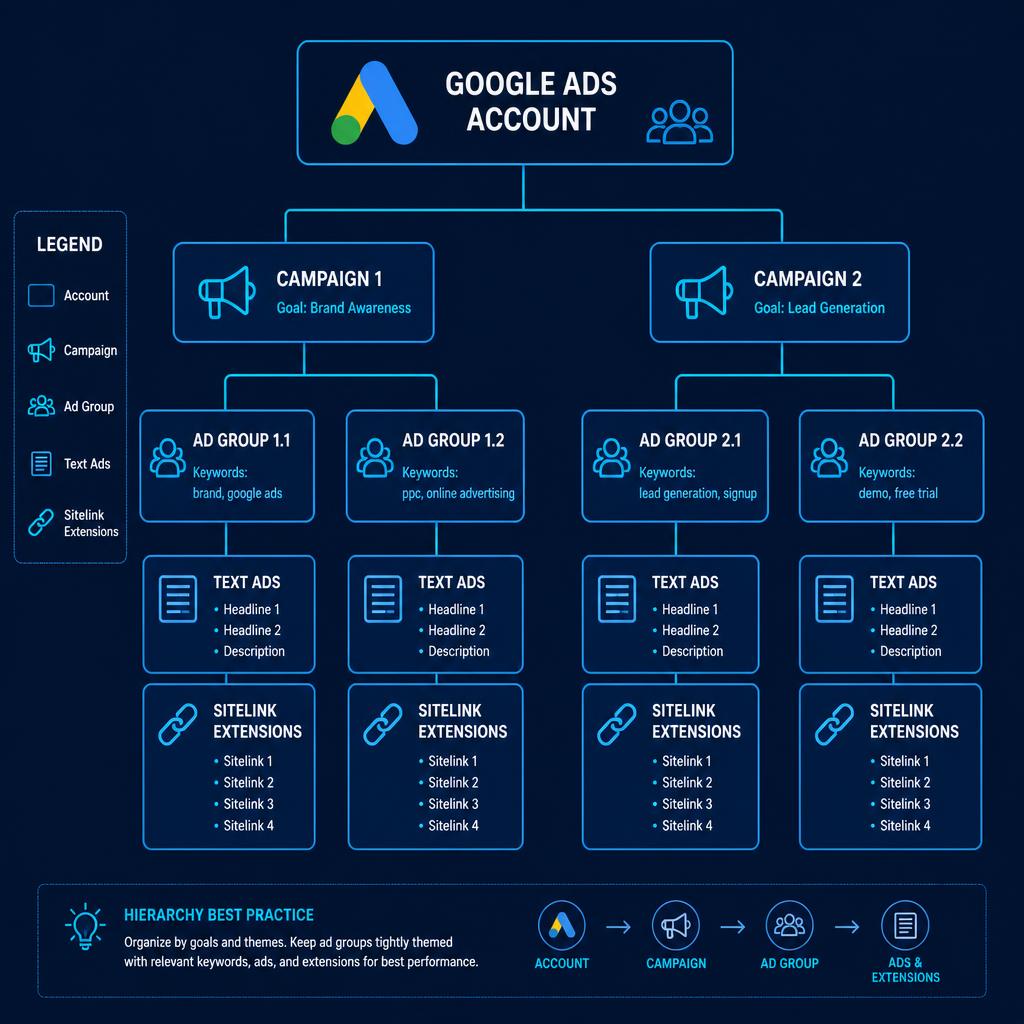
Segment by profit center and vehicle status so keywords do not cannibalize each other:
- Brand protection: Exact match on your dealership name with high priority bids.
- New inventory: Model-specific ad groups (for example, “2026 Honda Civic deals”) aligned to OEM incentives and filtered inventory pages.
- Used & CPO: Feed-driven Vehicle Ads with dynamic pricing where possible.
- Competitor conquesting: Controlled bids on rival dealer names with differentiation-focused ad copy.
- Service & parts: Separate, stable budget for oil changes, brakes, tires, and repair revenue.
A clear architecture makes ongoing Google Ads management measurable by profit center instead of a blended cost-per-lead that hides which models actually sell.
Offline Conversion Tracking (OCT) via CRM
The real differentiator between average dealership accounts and high performers is Offline Conversion Tracking. When a lead submits a form or calls, Google stores a GCLID or Enhanced Conversions signal. When that lead signs paperwork days or weeks later in VinSolutions, DealerSocket, Salesforce, or a similar CRM, that sale milestone must be uploaded back into Google Ads.
Feeding actual deliveries into Target CPA or Target ROAS teaches Smart Bidding to pursue buyers—not browsers. This is the same data discipline enterprise B2B accounts use, and it is why a serious google ads agency dubai insists on CRM feedback before scaling automotive budgets.
Budget and Landing Page Alignment
Where you send traffic matters as much as how you buy it:
- Vehicle Ads → exact Vehicle Detail Page
- Model Search → filtered Vehicle Inventory Page for that model
- Financing keywords → frictionless pre-approval page
A practical monthly spend baseline for many dealerships looks like this:
- Search (intent-driven): 55–60%
- Vehicle Ads (inventory-driven): 20–25%
- Precision remarketing: 10–15%
- Brand defense: 5–10%
If structure and tracking are messy, start with a Google Ads audit, then apply a focused Google Ads tune-up before increasing spend. An Adwords agency that scales a broken automotive account usually scales wasted leads, not deliveries.
How Leading Dealerships Work With Admoon
At Admoon, we engineer automotive performance systems—not vanity dashboards. The goal is a lower cost per acquisition per vehicle sold, not a lower CPC in isolation. Through CRM integrations, inventory feed hygiene, and ruthless negative keyword control, Google Ads becomes a predictable pipeline for the showroom floor.
Final Takeaway
Treat google ads for car dealerships automotive as a financial system: align keyword intent with live inventory, close the loop with offline conversions, and measure success in delivered units. Stop optimizing for impressions and start optimizing for sales feedback.
Frequently Asked Questions
Which Google Ads format yields the highest ROI for car dealerships?
A combination of Vehicle Ads for inventory matching and exact-match Search Ads for high-intent phrases like lease deals near me consistently delivers the strongest close rates and lowest cost per sale.
How do we stop dealership ads from showing for irrelevant searches?
Maintain a continuously updated negative keyword list that excludes DIY, repair manuals, jobs, scrap yards, toys, and scale models so traffic stays buyer-focused.
Why isn’t Performance Max delivering car sales?
PMax needs rich signals. If you only track website clicks—or never upload CRM lists and sold-unit offline conversions—the algorithm lacks feedback to find real buyers.
Should Service and Sales share one campaign budget?
Usually no. Service and parts have different intent, margins, and seasonality. Separate budgets keep oil-change volume from crowding out high-ticket vehicle acquisition.